

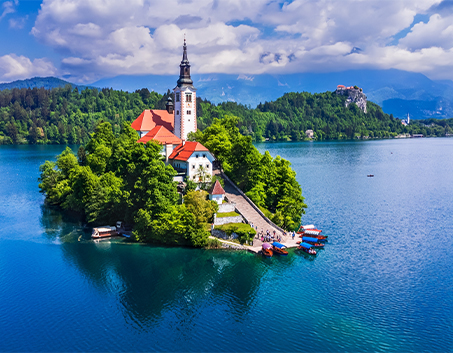
There are some countries where the mere mention of their name brings a single image to mind. For most, Slovenia immediately evokes Lake Bled—the postcard-perfect view of an emerald lake with a tiny island and a church rising at its center.
Yet seeing Slovenia as nothing more than Bled is like judging a novel strictly by its cover.
Stretching from the foothills of the Alps to the shores of the Adriatic, this small nation harbors perhaps one of Europe’s most refined surprises. Within just a few hours of driving, you can journey from emerald rivers to historic towns, alpine shepherd pastures to cave castles, and tranquil lakes to the cobbled coastal streets of the Adriatic. Best of all, you experience this away from the shadows of overwhelming crowds, enveloped in a calm and sophisticated atmosphere.
This is where Slovenia’s true privilege lies: it does not shout to get your attention. It does not rush. It doesn't ask you to check boxes off a bucket list. Instead, it behaves like a country designed to shift the very pace of your travel.
A Story That Begins at the Lake, But Doesn't End There
Imagine walking along the shores of Lake Bled in the early morning hours. The mist hasn't completely dissipated. The soft splash of oars echoes across the water. The small island in the center slowly comes into focus with the first rays of sunlight. A church bell rings faintly in the distance; there is no rush, no hurry.
This is where the magic of Bled begins.
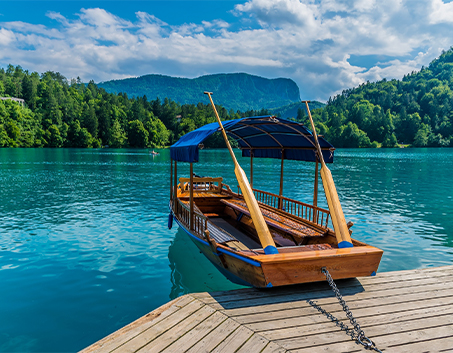
Walking around the lake, taking a traditional pletna boat to the island, admiring the view from the cliffside castle, or tasting the famous Bled cream cake are all classic—yet still deeply captivating—parts of the experience. But Slovenia’s true narrative deepens once you leave Bled behind.
Because the country’s character rests not on a single landscape, but on a series of nearby yet soulfully distinct routes.
The Path Beyond Bled: Bohinj
To truly understand Slovenia, you shouldn't stop at Bled; you must keep going.
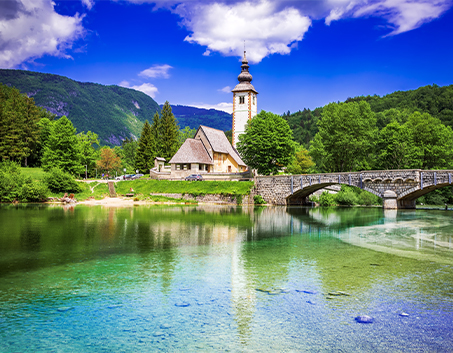
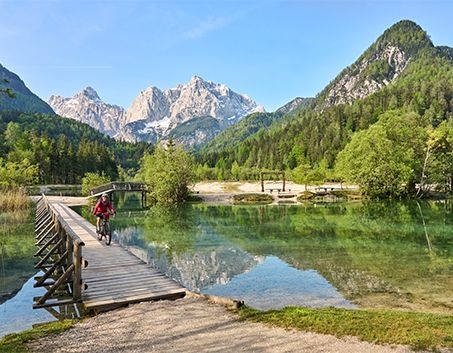
Just a half-hour drive away lies Lake Bohinj, representing the quieter, more raw, and introspective side of the country. Nestled within Triglav National Park, Bohinj offers a wilder, untouched beauty compared to Bled’s polished postcard charm.
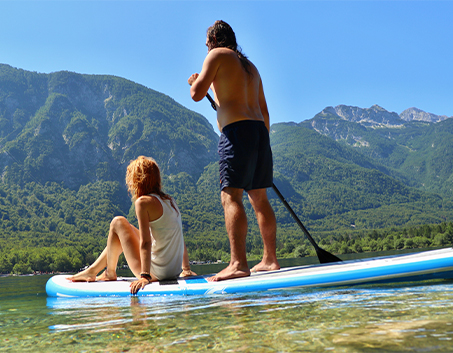
Here, taking in the scenery is not a passive activity. You can hike around the lake, paddle across the calm waters on a kayak or paddleboard, trek up to Savica Waterfall, or ride the cable car up to Mount Vogel for a sweeping panorama of the Julian Alps.
Bohinj’s elegance lies in its understated nature. It speaks softly, but leaves a deeper mark.
A Place Where You’ll Believe Emerald Water Actually Exists
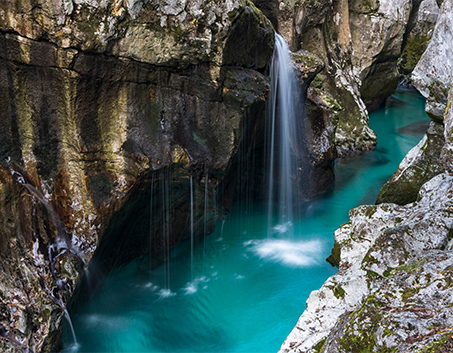
Heading westward into Slovenia, the road leads you to one of Europe’s most striking natural realms: the Soča Valley.
The striking turquoise water that looks almost filtered in photographs is just as vivid in real life. With its crystal-clear purity and intense color, the Soča River is a haven not only for landscape photographers, but also for travelers who love rafting, hiking, cycling, and outdoor adventures.
One of the most breathtaking ways to reach the valley is by traversing the winding mountain pass across the Julian Alps. The Vršič Pass, with its hairpin turns and high-altitude vistas, turns the journey itself into a key destination.
The beauty of spending time here is that you never feel pressured to do anything. Sometimes, simply sitting by the riverbank and watching the water flow is the most unforgettable moment of the day.
Less of a Capital, More of a Lifestyle
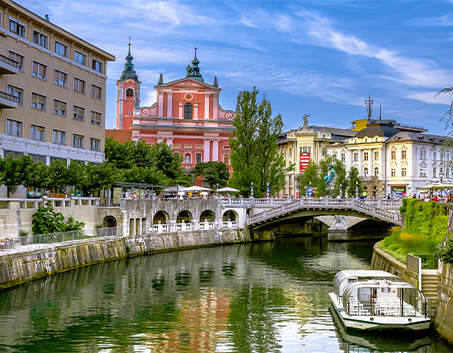
Many European capitals define themselves by grand monuments. Ljubljana, however, lingers in memory through its way of life.
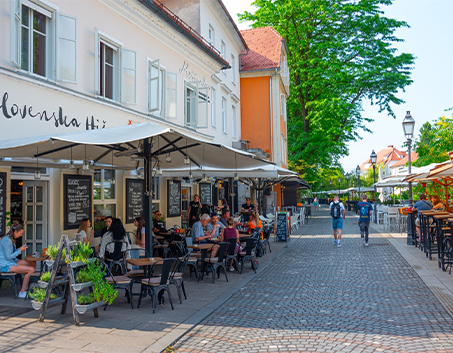
With motor traffic restricted in the city center, exploring the streets on foot feels completely natural. Riverside cafés, bookstores, small art galleries, and open-air markets offer the complete antithesis of the frantic rush typical of larger cities.
Here, coffee breaks naturally extend. Conversations linger. As evening sets in, life along the river transforms into an energetic yet unpretentious rhythm.
Perhaps Ljubljana’s greatest strength is precisely this: it feels no need to prove itself to you.
A Forgotten World Above the Clouds
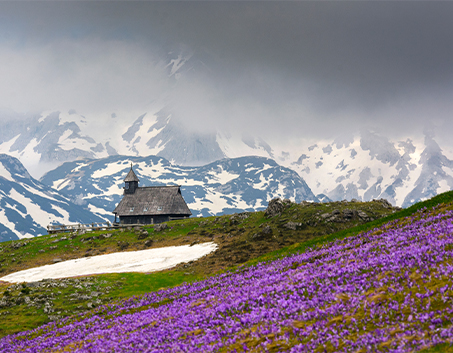
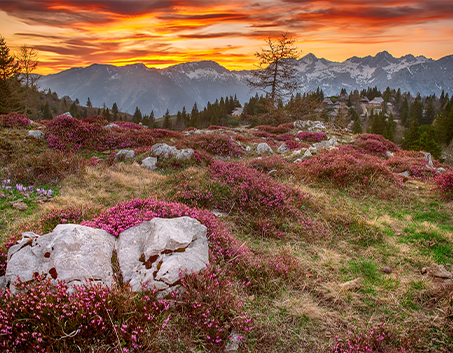
One of Slovenia’s most mesmerizing surprises rarely makes it onto standard itineraries: Velika Planina.
High up in the Kamnik-Savinja Alps, this high-mountain plateau is one of the country’s most poetic stops, characterized by traditional shepherd settlements and wooden huts. In summer, the pastures come alive, the huts are occupied once more, and a quiet bridge is built between the past and present high above the world.
When you reach the top, the first thing you notice is the silence. Then the mountain breeze. Then the faint chiming of cowbells. And finally, a feeling almost forgotten in modern city life: simplicity.
Another Slovenia Underground
Slovenia is not made solely of lakes, rivers, and alpine peaks. The country’s Karst region carries an entirely different geographical soul.
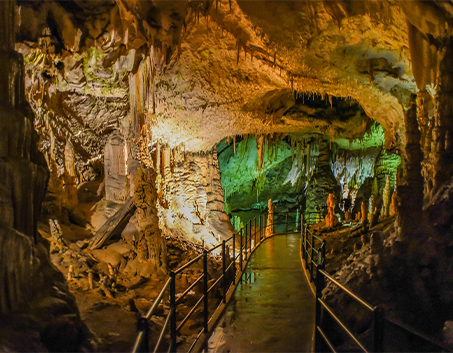
Postojna Cave, with its stunning subterranean formations and underground train ride, is one of the nation's most popular natural wonders. Meanwhile, the UNESCO-listed Škocjan Caves offer a magnificent, dramatic glimpse into the depth of Slovenia's natural heritage.
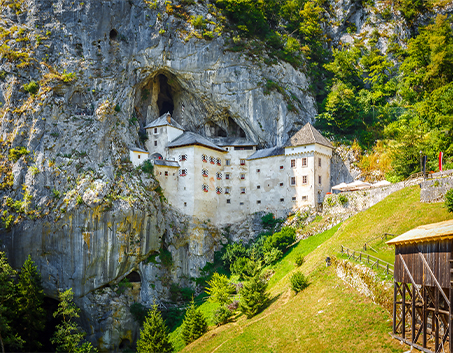
Perched dramatically into a cliffside nearby stands Predjama Castle—a fortress built directly into the rock face that blends architectural history with a fairytale atmosphere.
The Karst region serves as a reminder that Slovenia is not only green and serene, but also dramatic and mysterious.
Cobbled Streets Opening to the Adriatic
Slovenia’s short yet characterful coastline adds an unexpected Mediterranean texture to the country’s tapestry.
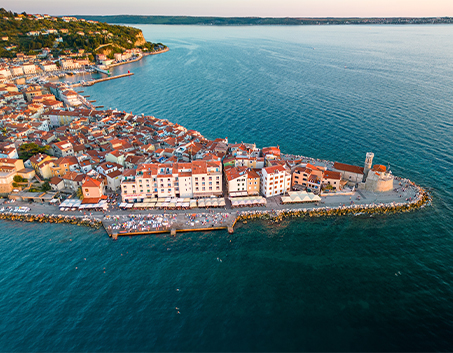
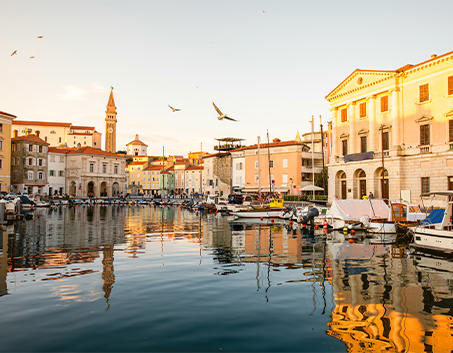
Piran, with its narrow stone alleys, Venetian-influenced architecture, and plazas opening straight to the sea, is one of the most charming coastal towns on the Adriatic. Here, the crisp alpine air gives way to the scent of salt water, and the quiet of the lakes yields to the gentle rhythm of the sea.
This is part of Slovenia’s magic: it is compact enough that you can wake up to mountain vistas and stroll along the seashore by late afternoon, yet rich enough that every stop feels like an entirely new world.
Small Country, Grand Gastronomy
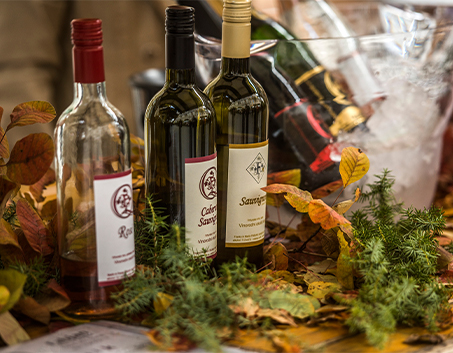
Perhaps Slovenia’s most underrated aspect is its gastronomy. Drawing rich influences from Italian, Austrian, Hungarian, and Balkan culinary traditions, the country has quietly emerged as one of Europe’s premier centers for sustainable gastronomy.
Restaurants partnering directly with local producers, seasonal tasting menus, natural wines, and farm-to-table dining turn a journey through Slovenia into a rich sensory experience.
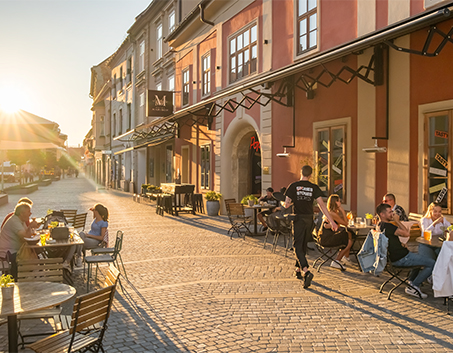
Sometimes it’s a taste of artisan cheese in a tiny mountain village... Sometimes a glass of local wine at a family-run vineyard... And sometimes simply the aroma of freshly baked bread. The memories this country leaves with you often stem not from lavish dining rooms, but from modest, heartfelt tables.
Where Travel Slows Down Again
Modern travel is often built around the idea of seeing more. More cities. More museums. More photos. Slovenia gently proposes the exact opposite.
Sitting a little longer by the river... Walking a little slower along a mountain path... Enjoying a cup of coffee without checking the time... Walking quietly around a lake rather than just photographing it...
Perhaps that is why travelers returning from Slovenia rarely lead with stories of the sights they saw; they talk about the peace they felt. Some countries hand you a to-do list. Slovenia reminds you of the rhythm of the journey. And sometimes, that is the greatest luxury travel can offer.