

There are some cities you recognize not by their maps, but by their sounds.
Pamplona is one of them.
Every year during the first week of July, white clothes filling narrow cobblestone streets, red scarves, cheers echoing from balconies, and a single rocket fired in the early morning hours... Those few minutes where thousands of people from all over the world hold their breath simultaneously form the most famous moment of the San Fermín Festival.
Most people know Pamplona only for its running of the bulls.
Yet San Fermín is far more than just a few minutes of adrenaline-fueled spectacle. It is one of Europe's most characteristic urban festivals—a nine-day celebration where the entire city lives as a single organism, intertwining religious traditions, music, street culture, gastronomy, and centuries-old local rituals. Its present form evolved over time through the merging of medieval religious commemorations, autumn trade fairs, and the tradition of guiding bulls intended for the arena through the city streets.
A Saint's Day, a Fair, and the Identity of a City
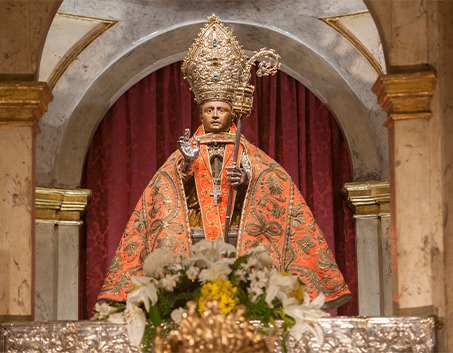
The festival takes its name from San Fermín, who is considered the patron saint of Navarre.
However, the roots of today's festivities do not rest solely on religious ceremonies. Commemorations for the saint held since the 12th century, large trade fairs in the 14th century, and morning drives to lead bulls to the arena gradually merged around the same dates to form today's festival. At the end of the 16th century, due to poor autumn weather conditions, the celebrations were moved to July 7th, giving birth to San Fermín as we know it today.
For this reason, the festival is not merely entertainment; it is viewed as a living piece of urban memory that Pamplona has preserved for centuries.
The Three Minutes the World Talks About: Encierro
When San Fermín is mentioned, the first tradition that comes to mind is undoubtedly the Encierro, or the bull run.
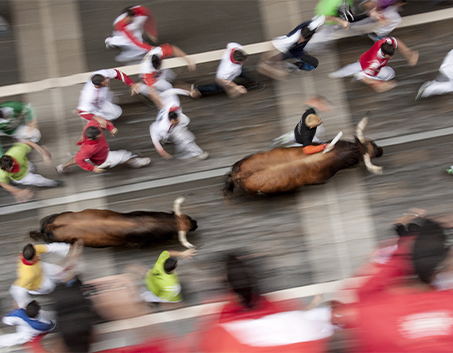
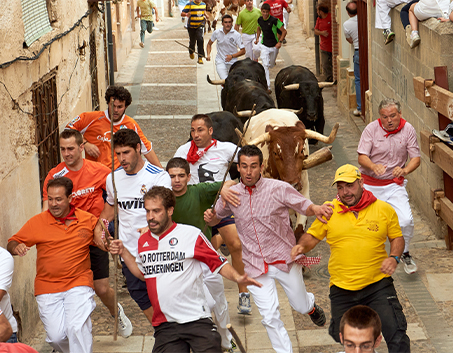
Every morning at precisely 8:00 AM, six bulls and guiding oxen run along an 875-meter route from Santo Domingo to the Plaza de Toros. The entire course is usually completed in just three to four minutes.
The majority of participants are experienced local runners who have maintained this tradition for years.
Authorities emphasize each year that the event carries serious risk. There are established safety rules for participation, and inexperienced visitors are strongly advised to watch the event from safe viewing spots rather than running.
In truth, for many visiting Pamplona, the Encierro is merely the day's opening event.
The city's true rhythm begins right after.
The Meaning of the Red Scarf
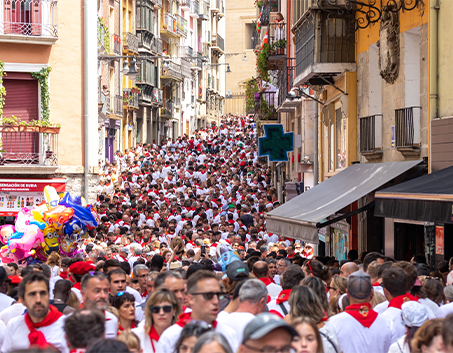
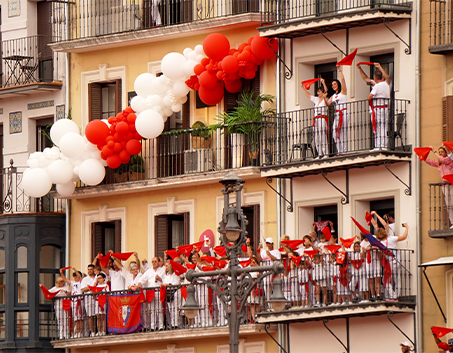
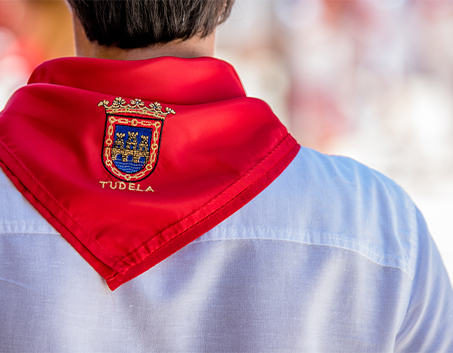
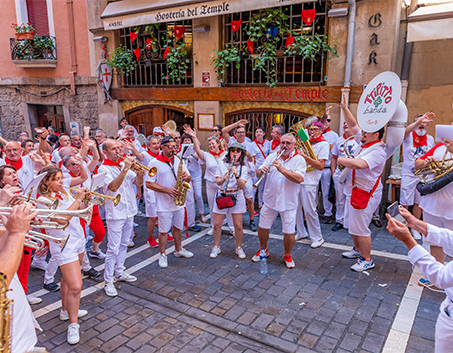
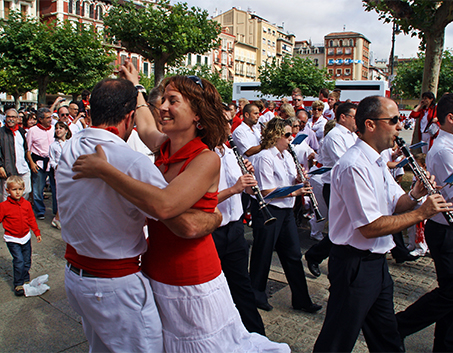
Throughout the festival, almost everyone wears white attire paired with a red neckerchief.
This image has become one of the world's most recognizable festival symbols today.
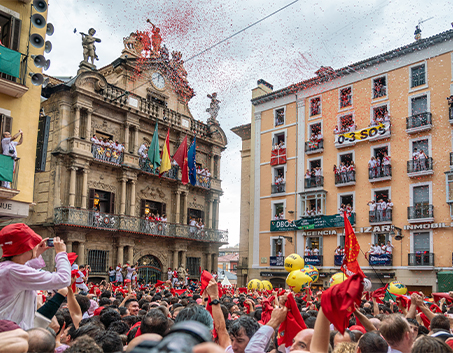
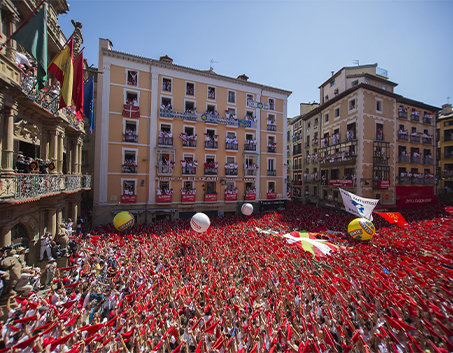
The festivities kick off at noon on July 6th with the launching of a firecracker called Chupinazo from the balcony of the city hall.
Thousands of people raise their red scarves into the air simultaneously.
The festival concludes on the night of July 14th with the emotional singing of the "Pobre de Mí" song.
And the city begins waiting for this moment once again for a whole year.
Describing San Fermín Only by Bulls Falls Short
The streets of Pamplona hardly sleep during the festival.
- Parades throughout the day...
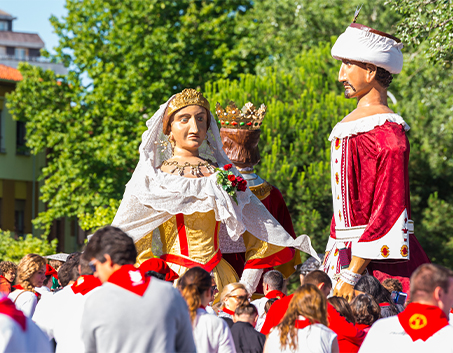
- Giant puppets...
- Local dance performances...
- Brass bands...
- Children's activities...
- Open-air concerts...
- Fireworks displays...
- Small celebrations spreading across every neighborhood of the city...
This is precisely what sets San Fermín apart.
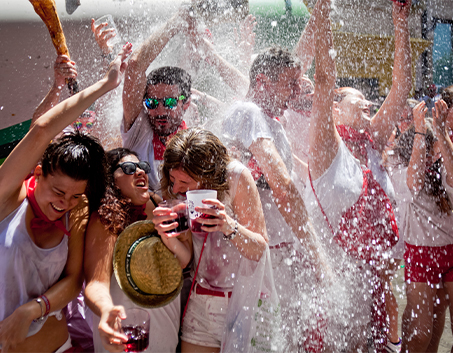
The festival is not merely an event to be watched; it is a collective experience lived together by the entire city.
Pamplona Opening to the World in Hemingway's Footsteps
Ernest Hemingway deserves one of the greatest credits for San Fermín's global fame today.
The author first visited Pamplona in 1923 and introduced the festival to millions of readers through his novel The Sun Also Rises (Fiesta).
The novel was not only an important literary masterpiece; it became a turning point that put Pamplona on international travel maps.
However, the festival's global scale today is not due to Hemingway alone. Developing international tourism in later years, transportation networks, and Spain's promotional strategies transformed San Fermín into one of the world's most visited urban festivals.
Quick Notes for Those Planning to Visit
- The festival takes place every year between July 6th and 14th.
- Accommodation reservations can fill up months in advance.
- Watching from balconies or safe viewing areas rather than participating in the bull run is recommended as the safest option.
- The city's historic center is explored entirely on foot during the festival.
- This period is considered the most vibrant time of the year to experience Navarrese gastronomy.
What Makes Pamplona Truly Unforgettable
Thousands of people gathering in the same square...
Rituals passed down from generation to generation...
An excitement rekindled every single morning...
And a city memory that has remained unchanged for centuries.
Perhaps this is precisely what makes San Fermín one of the most special festivals in the world.
People travel to Pamplona to see the Encierro.
Yet when they leave, what they take home is almost always far more than just a bull spectacle.