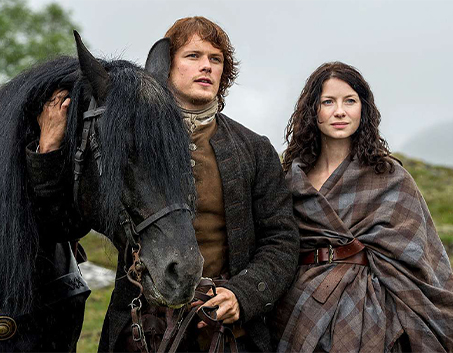
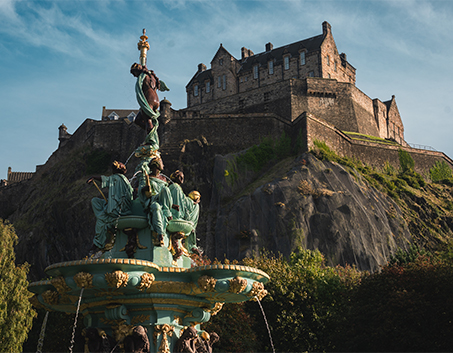
Some cities become more beautiful in front of a camera. Edinburgh, however, teaches the camera itself how it should be looked at. With its castle set upon volcanic rock, dark stone facades rising toward the sky, narrow passages that suddenly open onto a courtyard, and streets that absorb light before slowly giving it back, cinematography was established here long before filming ever began.
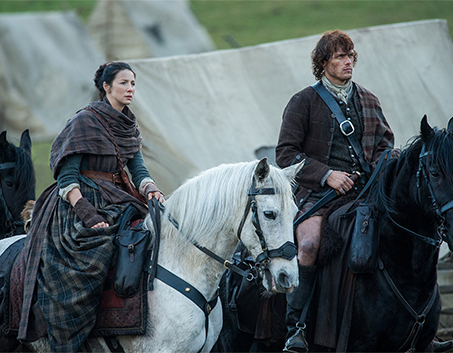
For this reason, Outlander’s connection with Edinburgh is no coincidence. Adapted from Diana Gabaldon’s novels, the series tells the story of Claire, who lives in the 20th century, being swept into 1743 Scotland, while using time not merely as an element of fiction. It also makes visible the idea that the past continues to live within the present. In Edinburgh, there is no need for a stone circle for this idea. Turning a street corner is often enough.
The City of Stone, Shadow and Firelight
In Outlander’s visual world, the 18th century is built through sunlight, moonlight and firelight. The warm light flickering indoors, the landscape softened by mist outside, and the stone surfaces surrounding the characters keep the past from becoming a sterile period backdrop. They turn it into a world that has been lived in, worn down and marked by traces.
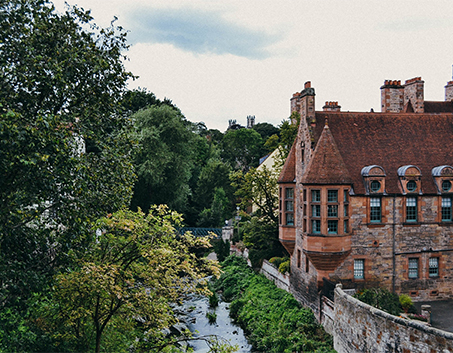
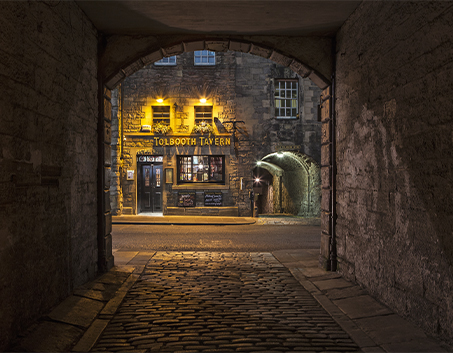
Edinburgh’s natural texture speaks the same language. In the Old Town, buildings do not simply stand beside one another; they almost seem to live on top of one another. The narrow passages called “closes” and “wynds” branching down from the Royal Mile open onto stairways, small courtyards and unexpected darkness. This rhythm, which takes a person between two stone walls immediately after a broad city view, feels like a ready-made composition for cinema: first the city appears, then it hides its secrets.
What makes Edinburgh impressive is not simply that it looks old. The city does not try to perfect its past. With its worn steps, rain-darkened stones and eras built onto one another, it preserves the traces of time. Outlander also finds its strength precisely here; history is not a backdrop watched from afar, but a living weight settling onto the shoulders of the characters.
Royal Mile: The City’s Timeline
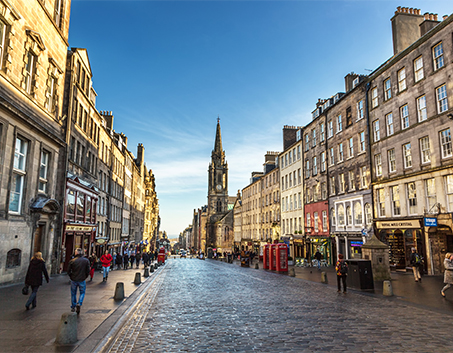
The strongest starting point for an Edinburgh visit is the Royal Mile, stretching from Edinburgh Castle on Castle Rock to the Palace of Holyroodhouse. This is less a street than a long spine carrying the city’s memory. The medieval street layout, tall stone buildings, passages and inner courtyards still give the Old Town a powerful sense of enclosure today.
The New Town across the city is the product of an entirely different idea. Beginning to take shape with James Craig’s 1767 plan, this part represents the Enlightenment’s understanding of order, proportion and progress through its symmetrical streets, squares and neoclassical facades. Edinburgh’s true artistic and historical value lies in the fact that these two worlds can remain side by side without destroying one another. On one side, a medieval city that grew intuitively; on the other, a Georgian urban order drawn by reason and ruler… In Edinburgh, time travel already exists within the architecture.
From One Passage to Another Era: Bakehouse Close
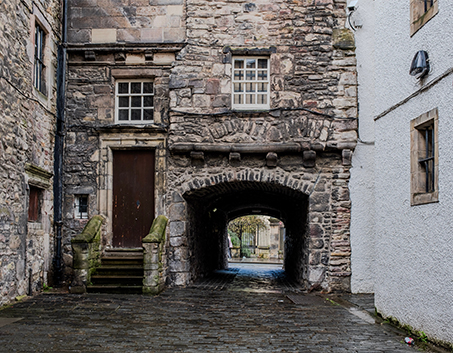
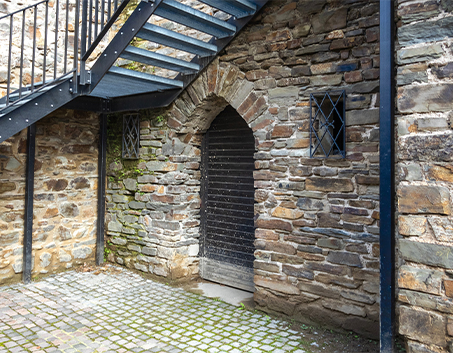
Bakehouse Close in the Canongate section of the Royal Mile is one of the Edinburgh filming locations most sought after by Outlander fans. The passage, named Carfax Close in the series, was used in the third season as the exterior of the print shop operated by Jamie under the name Alexander Malcolm. The threshold of the story, where Claire and Jamie reach one another again after twenty years, was established here.
The impact of the place does not come only from the emotional importance of the scene. As you pass beneath the arch dating to 1570, the noisy Royal Mile is left behind within a few steps. The sound decreases, the view narrows, and the stone surfaces draw closer. The city prepared centuries ago everything cinema could build for a transition scene. Bakehouse Close is therefore more than a “photo spot”; it is the architectural form of the series’ themes of time, loss and reunion.
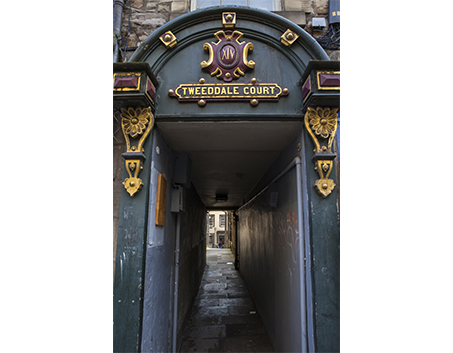
Nearby Tweeddale Court was also transformed into a lively 18th-century market in the third season. This courtyard, where Claire encounters Fergus again, is quite peaceful today. This is one of the most beautiful aspects of Edinburgh’s relationship with cinema: the place that is crowded on screen is quiet in reality, while the wall that appears to belong to the past in fiction is open to everyday life today.
Other Geographies in the Same City
Outlander’s use of locations also shows how many different identities Edinburgh’s architecture can take on. The magnificent Signet Library beside St Giles’ Cathedral was transformed into the residence of the Governor of Jamaica in the series. With its columns, balanced proportions and bright interior, it presents a refined Georgian order opposite the dark passages of the Old Town.
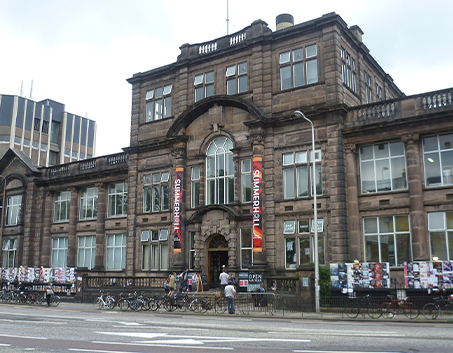
The anatomy lecture theatre of the former veterinary school, Summerhall, hosted scenes of Claire’s medical education in Boston. In this way, an urban fabric spanning just a few kilometres could become both 18th-century Edinburgh, Jamaica and 20th-century America. This transformation is not only the achievement of good production design, but also of a layered city.
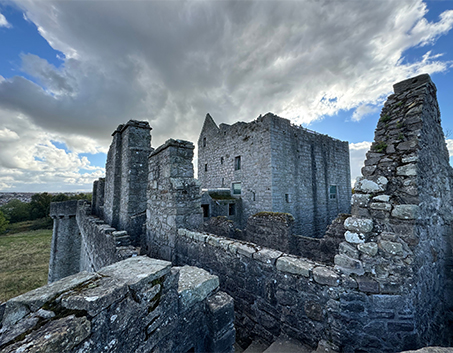
Craigmillar Castle southeast of the centre appears in the series as Ardsmuir Prison, where Jacobite prisoners were held after Culloden. In its real history, however, this castle, where Mary, Queen of Scots stayed in 1566, passed through political intrigues and struggles for power. Its courtyards exposed to the wind and its half-dark rooms make you feel the vulnerable side of history rather than a decorated palace. The fact that it is not as imposing as Edinburgh Castle also makes it more special.
The Jacobite Memory Behind the Romantic Narrative
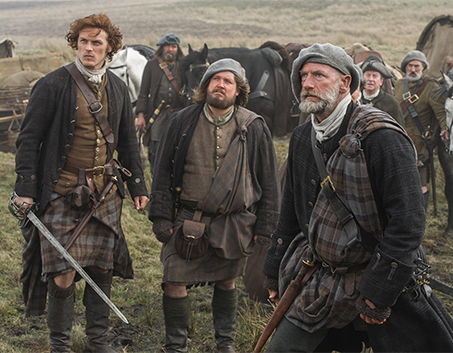
Outlander tells the Jacobite period through love, loyalty and loss. Yet the historical shadow of this story is more complex in the streets of Edinburgh. The Jacobite movement was not merely a confrontation between Scotland and England; it was a political, religious and dynastic struggle that developed around the aim of restoring the Stuart dynasty to the throne. This conflict, in which Scots also took different sides, became a profound rupture in Highland life with the Jacobite defeat at Culloden in 1746.
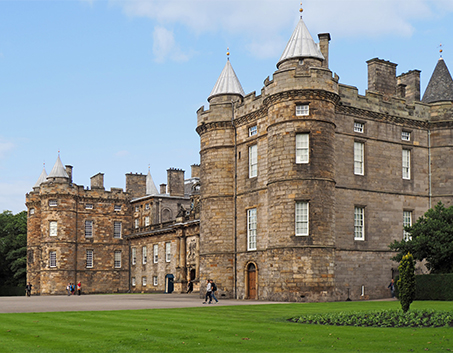
The Palace of Holyroodhouse at the eastern end of the Royal Mile is an important stop in this memory. When Bonnie Prince Charlie entered Edinburgh in 1745, he stayed here and temporarily turned the palace into a Jacobite centre. The building is not directly an Outlander filming location; however, it is indispensable for seeing the real counterpart in the city to the world described by the series. Fiction and history come close to one another precisely here, but they do not replace one another.
Where History Falls Silent, Legends Speak
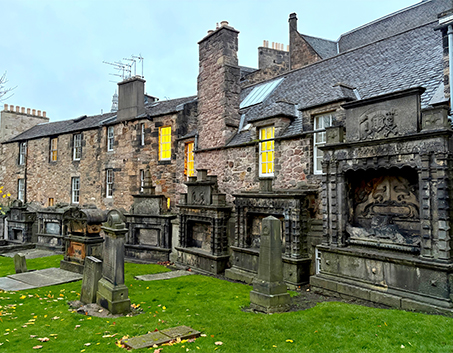
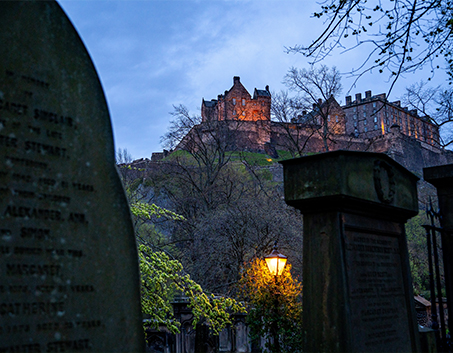
Edinburgh’s ghost stories, underground chambers and dark graveyards are not merely a tourist embellishment. In the Old Town, shaped by epidemics, fires, crowded living conditions and political violence, oral traditions gave language to fears that official history did not record. It may not be possible to prove the truth of the stories told around Greyfriars and beneath the Royal Mile; but it is not difficult to understand why they were born here. Outlander’s time travel also draws from the same root: the old belief that the past has not entirely disappeared, and that some places preserve what happened in their stones and silence.
Exploring Edinburgh as More Than Just a Set
It is right to set aside at least three days in the city to complete the Outlander route. On the first day, the Royal Mile, Bakehouse Close, Tweeddale Court, Signet Library and Holyroodhouse can be explored on foot. On the second day, the National Museum of Scotland can offer a broader perspective on the country’s story; afterwards, you can climb Arthur’s Seat, the remains of an ancient volcano, and read the geography of the city between the castle, sea and hills. The measured streets of New Town and the panorama from Calton Hill show that Edinburgh is not made up only of medieval darkness.
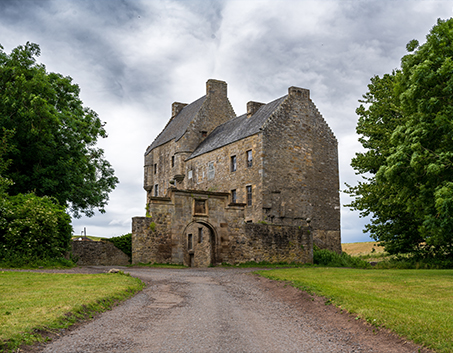
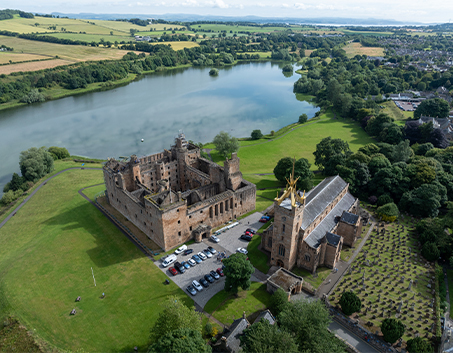
If a fourth day can be added, the route can be extended to Outlander locations outside the city. While Hopetoun House transforms into different periods and geographies in the series, nearby Midhope Castle was used as the exterior of the Fraser family home, Lallybroch. Blackness Castle was transformed into Fort William; Linlithgow Palace into Wentworth Prison. As these sites are located in different directions, rather than squeezing them all into the same day, allowing time for a few selected stops makes it possible to truly see the Scottish landscape. Since visiting conditions and opening periods can change, current information should be checked before setting out, especially for Midhope Castle and private properties.
Although Edinburgh is suitable for exploring on foot, its sloping and stone-paved streets require comfortable shoes. As the weather can change several times within the same day, a light rain jacket is useful in every season. August is the city’s liveliest period with festivals; for a calmer experience closer to the Outlander atmosphere, spring and autumn offer more balanced options.
When the Curtain Falls, the City Remains
What makes Edinburgh special is not that a series was filmed here. What is truly impressive is that all the emotions the series needed were already present in the city: time accumulated in stone, curiosity growing in narrow passages, freedom visible from the hills, and wounds of history that never fully close.
Outlander offers a powerful lens through which to look at this city; but Edinburgh quickly exceeds the boundaries of that lens. When you leave Bakehouse Close and merge back into the Royal Mile, you are no longer following only the traces of Claire and Jamie. You see how a city carries its past, how it retells it, and how it can remain itself through all the eras.